Showing posts with label Higher Level Subjects. Show all posts

Sunday, September 27, 2015

HL History

Writing a GOOD Historical Investigation

Hi Everyone!

     Welcome back to IB Survivalists. This week, I have been busy with writing up the first two sections of my historical investigation. I am an HL History student studying the European History route, but I did not pick a research question that fell within my syllabus. Even though it is highly recommended to pick a topic from your syllabus, it is not mandatory. The IB provides an outline for how to write the historical investigation, but I wanted to do more research to find out what exactly I should include in each section and also what I should avoid including in each section. Anyone who has completed the historical investigation knows that the criteria is extremely strict when it comes to each section of the paper, so it is crucial to follow it to a T. I found an incredibly helpful PDF that outlined the Don'ts of a historical investigation. You can read about it here. This is my quick summary of what the PDF had to say:

10 Things To Avoid When Writing Your Historical Investigation


1.  Choosing an inappropriate/unclear question

Much like any other subject, choosing too broad of a question usually leads to an underdeveloped essay. Being specific is highly recommended here!

2. Failing to properly structure you investigation into the 6 sections

As I mentioned above, the criteria for your investigation is tough. If you mistakenly mix up your sections and add something that belongs in Section C to Section B instead, you won't be awarded any points even though you included the information! Also, make sure to organize your essay in a way that it i easy to follow. Use sub-headings. They are greatly appreciated!

3. Omitting key information in Part A

Part A requires you to state your research question, mention the scope of your investigation, and summarize the methods you will use for answering your question. If you miss out any of these three things that are fairly easy to answer, you will be marked down!

4. Failing to properly cite sources

Okay, this one's a given. You can use any format you want for this investigation, but MLA is recommended since it is widely recognized. In Part B of the paper, you are required to summarize every bit of information you will use later in your essay. If you don't cite this information, even if you paraphrase, you will lose a ton of marks (and your teacher's respect). 

5. Plagiarise

We have been lectured about this several times. But for any internal assessment, it is a BIG no-no. 

6. Using short bullets instead of writing in paragraphs

You are allowed to use bullet points in Section B of the investigation, but it isn't recommended. This is because it's easy to write in short sentences and not have proper grammar/clear language. Instead, you should bullet your subheadings for this section and write a small paragraph for what it's about underneath. This will also help with the organization of your paper when it comes to your analysis!

7. Not analyzing the origin, purpose, value and limitations for 2 sources in Part C

Part C asks for an OPVL analysis of two sources. Why two? Because it is much easier to focus on your two biggest sources rather than analyze each and every one individually. Try and pick one primary source and one secondary source. Also, even though origin and purpose are the easiest to answer, they are often overlooked. Don't forget about them!

8. Confusing your summary of evidence with your analysis

Part C asks for a detailed analysis of all of the information you included in Part B. Therefore, Part B should be all about stating the facts. Don't interpret them - save it for later. Also, don't analyse a piece of information that wasn't included in Part B. 

9. Exceeding the 2,000 word limit

This one is pretty straight forward. You won't get marked for anything you write past 2,000 words. And who wants to read that much, anyway? (By the way I am guilty of doing this in other classes so don't feel bad about yourself)

10. Forgetting to have someone proofread for you

Sometimes it's hard to recognize your own mistakes (not just when it comes to essays!). Have someone you trust proofread for you!

     I hope that helps. This was the kind of things I was looking to find during my research before I started writing, so I hope it's a jackpot for you too!

- Sophie F. 

Saturday, May 30, 2015

HL History

A Visit to the World War II Museum

Hi Everyone!

     About a week ago, some of the high school students at out school visited the World War II Museum in New Orleans to conclude our history classes for this year. I'm currently studying European History, and I just finished learning about World War Two. I was incredibly excited to visit the museum and see my history book come to life!

     First, we were lucky enough to watch a 4D movie that summarized the war. The movie was narrated by Tom Hanks and was incredibly detailed. It was amazing to listen to the recounts of all the soldiers and see videos of the terrifying events that took place, like the attack on Pearl Harbour. It was extra strange for me, because I have Japanese and British heritage. Both countries were on opposites sides during the war, so it was interesting to see each country's perspective.

     After viewing the movie, we walked to the next building where an exhibit on Germany was set up. As most of you may know, Germany played an influential role in the war and it was breath-taking to see authentic uniforms, jewelry, bullets, weapons, and diaries that were used during the war.

     Lastly, we visited the section of the museum where the airplanes were hung in the air. It was unbelievable to look up and see massive aircrafts hovering above me. To think that they were once used in battle was tough to wrap my mind around!

     I would 100% recommend any history student to visit the World War II museum in New Orleans. I am looking forward to going back again and spending more time looking at each exhibit!

Here are some pictures of our trip:


Thanks for stopping bye!

- Sophie F.

Friday, May 29, 2015

HL Visual Arts

Blue Matrix

Hey y'all,

     I am here to update you on the art section of our blog. So far, art class is going well. I apologize for this topic of the blog not being updated enough. I recently finished a comparative study and put up a new exhibit in the front office of our school for everyone to see. The new exhibition is all photography and the theme of my new exhibition is called "Blue Matrix". I called my exhibit this because one of my favorite movie series of all time (The Matrix) had inspired me to do so. That is because in the Matrix series, the theme color is green. Oddly enough, I wanted to make the theme of my photography exhibition blue. Therefore, every photograph of mine is blue with various of other features. All of my photos are sized 8x10 on 16x20 white sketch paper, and I have a total of 9 pictures. I liked this project because it solely just consisted of taking pictures and manipulating them using a software of my choice. I used pixlr.com -  I recommend you to check it out! So that's what art class has been like for the past few weeks: completing a comparative study and creating a new exhibit. All went well by the way. Now we are just wrapping up the school year and getting ready for summer, which I certainly cannot wait for. One more week of school y'all...one more week.

Here are the pictures that I took for my exhibition:


Blue Hallucinations 


Blue Reflections


Bluey Caged Curiosity 


Blue Harmony


Blue Peasant Fish


Blue Kaleidoscope Eye


Blue Statue Curves


Timmy the Blue Lighted Dog


Sunset in the Blue View

Enjoy my pictures!

- Felicinda J

Monday, May 18, 2015

HL French

"Bonjour Tristesse" 

Hello everyone!


Here's an image of the cover of the book. 

      This year, in our HL French Literature class, one of the books we read was "Bonjour Tristesse"(English translation: "Hello Sadness"). I know what you guys are thinking! "Hello Sadness"? This title seems to be a little depressing and sentimental.

      Before I give y'all my opinion on the book I'll tell you more about the story. The main character's name is Cecile. Her mother died when she was a kid and we don't know much about her. She then lived with her father, Raymond, who sent her to boarding school in order to complete her education. After boarding school, she returned home. Anne, one of her mom's best friends, took care of her. She only took care of Cecile for a while. The plot of the book takes place during the summer at a beach house. They spent the entire summer at their beach house where Cecile met Cyril, her boyfriend. Raymond was an easy going dad and saw Cecile as his accomplice. He was a player and had short relationships with younger women. He even brought along his girlfriend Elsa with them on their beach trip.
 
     During the summer Anne goes and gives them a visit. Then, Elsa and Raymond break up. After some time Raymond and Anne start dating. Cecile is completely against this because she doesn't want Anne to change the easy going life she's had with her dad. Anne is a successful fashion designer. She has a dry personality and is indifferent towards many things. Cecile believes that because Anne lives such an organized and routinely life, her life would become similar if Anne were to marry Raymond. Therefore, Cecile comes up with a perfect plan to separate her dad and Anne.

       At the beginning this book was interesting, but nothing special. It started growing on me towards the end, though. Now it is one of my favorites! It talks about a teenager being afraid of change and wanting to stop it. Most importantly it reminds me that no matter what it may seem like we are all human beings with emotions and feelings that deserve respect. If you guys ever get a chance this is definitely worth reading!  Have a good day!

-Melissa S.

Monday, April 27, 2015

HL Biology

Biology MOCKS 

Hello everyone! 

     Who's excited for their upcoming mocks?!?!?!?!?! I know we are! I don't know about y'all but all we have been doing this last week is studying like crazy for our mocks next week. I hope you guys have been doing the same! Our teachers were kind enough to let us spend some of our class time reviewing and asking questions about our mock exams. This has helped a lot because I now feel more prepared for what is to come. I also feel as though for some subjects the best studying for me is done in class. Even though they are just mock exams we still get pretty nervous about them, so we hope to do the best that we can.

     I hope you guys are all doing just dandy since the last time we spoke! Our biology teacher told us that we need to know a couple of diagrams for our exams. He said that we should be able to recognize, label and draw some of them. The thing is, he didn't say which ones so we kinda have to memorize most of them. Therefore, this week in Biology, we have been working on practicing some diagrams. We have been working on heart diagrams and digestive system diagrams, among others. In preparation for our mocks I have been watching biology YouTube videos to help me study. I don't know about y'all but sometimes I find it boring reading my notes over and over again and I lose concentration easily. That's why I have been watching some Crash Course Biology videos to help me stay concentrated while studying. The Crash Course Biology channel on YouTube talks about many things; therefore, I only watch the ones that I have already learned about in class. However, even though watching videos is helpful, I don't recommend to make this your only way of studying. The videos could easily miss some topics you need to know - so go over your notes every now and then.

     Well, I wish everyone the best of lucks on any upcoming exams. Most importantly don't forget to chill before the exam. One thing that I have learned from taking previous exams is that I tend to perform better when I have relaxed the night before. Try not to cram extra studying time in, try to get a good nights sleep before the exam, and have a healthy breakfast the morning of the exam. I know these exams are stressful but try to calm yourself down and not make it hard for yourself. Remember: mind over matter!

Thanks for reading!

-Melissa S.

Tuesday, March 31, 2015

HL Biology

Sexual Reproduction 

Hey y'all!

     Well, I honestly have to say (and I speak for the other girls too) we are learning something that is a little awkward in Biology class right now: sexual reproduction. Although I used the title above to catch your eye, sexual reproduction is not the main thing we are focusing on. We are basically learning about the human body and how it works so we know how to take care of ourselves appropriately. It is a bit weird, but everyone has to know this because it is important. You must know your body and how it operates in order to properly take care of yourself because if you do not, then you will be an unhealthy being. We have just started studying this topic in Biology, but by far we have learned about the functions of the body from head-to-toe. Currently, we are learning about the menstrual cycle and the different hormones a female produces during this cycle.

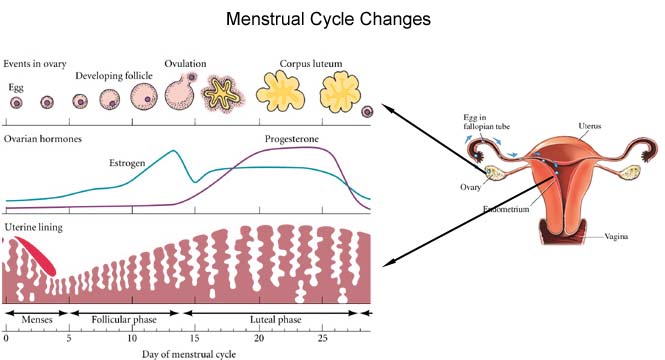
Here is a diagram that basically sums up a few things:


(Click on the image to enlarge)

How about a quick lesson?

     A menstrual cycle occurs every 28 days and lasts for about 7 days, but for some females it will be different because not everyone is the same. This means that some females will have an irregular period that persists longer or shorter than the norm. Now, to the right side of the diagram you literally see a vagina. The diagram labels the different things that a vagina consists of such as the ovaries, the entrance of the vagina, the Fallopian tube, the uterus, and the endometrium - all of these things makes a vagina. Furthermore, to the left of the diagram you are given the different stages that a vagina goes through and which hormones are produced. Now, you have learned something about the vagina that you may or may not have known!

- Felicinda J.

Sunday, March 22, 2015

HL History


Causes of WWII


Hey everyone!

     In our HL European History class, we were assigned to write an essay on the causes of World War II. We were instructed to focus on the 4 main causes of the war: the Treaty of Versailles, Hitler's leadership, the League of Nations and appeasement. I thought it might be helpful if I shared a some of my ideas and research that I incorporated into my essay.

     The Treaty of Versailles: this document was only seen as an agreement to stop fighting. It held no true power in maintaining everlasting peace. The treaty brought about anger and vengeance within the German population, due to the fact that Germany was not able to negotiate the terms. The country was forced to accept the terms, which included extensive reparations and a limit to the size of their army, or else war would be prolonged. The treaty made Germany feel inferior in the post-WWI period, which caused the country to retaliate and take extreme measures to protect itself. Germany felt this way because it lost much of its territory due to the Treaty of Versailles.

     Hitler's leadership: Hitler was part of the Nazi party before World War Two, and stood by many of the party's ideologies. These ideologies included eradicating communism and diminishing the entire population of Jewish people. The German population was fond of Hitler and what he stood for because he was the first person since WWI to show interest in making Germany a major world power once again. Hitler used his popularity to become chancellor. This position led him to take advantage of British and French weakness by re-militarizing the German army.

     The League of Nations: this "new world parliament" was supposed to act as a means of maintaining peace around the world. It was able to do so for the first few years of its existence, but this did not last. Since the United States was not a part of the League, the USSR was only a member for a short period of time, and Germany was allowed to become a member, the League held no authority because it only had the support from two major powers: Britain and France. For this reason, the League could not intervene in any major conflicts, like the island of Corfu incident between Italy and Greece. Therefore, the League lost the respect of many countries and its credibility since it was not able to carry out its mission of maintaining peace.

     Appeasement: this was seen as an issue because British and French statesmen failed to stand up against German demands. Instead, they compromised with Germany and allowed the country to re-arm its military without repercussions. As a result of this, Germany thought that Britain and France would continue to act as a push over and that they would not prevent Germany from breaking the Treaty of Versailles in order to avoid war. They were right. Due to the inaction of those two major powers, Germany began to carry through with its war-provoking plans. 

     I could easily go on and on about the causes of WWII, but this is a shortened version of the main points that were featured in my essay. I hope this helps those of you taking the course!

     Learn more about this topic by visiting History.com or by reading Causes, Practices and Effects of Wars by Mike Wells.

Thanks for stopping by!

- Sophie F.

Sunday, March 15, 2015

HL Spanish

"La Guerra de los Mundos"

Hey guys!

     This past week in Spanish class, Melissa and I have been spending time reading the first few chapters of the book "La Guerra de los Mundos".  Since our teacher has been sick (get well soon), we plan on answering questions about the chapters on Monday.


     Written by H. G. Wells, the book tells the story of mans experience during an invasion of the earth by extraterrestrials. So far, the main character has witnessed a UFO landing and the first deaths caused by the Martians.

     Anyway, since we're HL students, this novel will become one of the two readings that are required! I must say, it's strange to be reading a science fiction novel as DP literature. It will definitely make future essays more interesting...

-Giselle D.

Saturday, February 28, 2015

HL Visual Arts

Exhibition Update
Hey y'all!

     So remember when I said I would update you somehow on the art exhibition? Well here I am to do that! Our exhibition is doing fine. It took Jordyn and I about an hour and a half to set it up. So far, people say it looks great! I feel that in terms of my artwork, things could have been done better. Drawing people is a whole new thing to me because I've never attempt that type of art, you see. I got so into drawing human structures that I decided to make body language my exhibition theme! I find drawing people very intriguing. 

Here are some pictures (The big artworks are mine and the little ones belong to Jordyn) :


Here's our exhibition summary/rationale:

 Around The World in 12 Colors and Eight ways to Show Body Language

     Around the World in 12 Colors is a unique collection of twelve pieces of watercolor paintings, which were all inspired by the diversity in cultural meanings of art, from colors to body positions and even to clothing. Randomly paired with twelve random countries, each color was chosen to represent one or more cultural meanings, as well. Now, the order of these pieces does not tell a story, but takes you on an adventure with glimpses at each of the 12 individual cultures. 
- Jordyn Krumm

     Eight Ways to Show Body Language is a collection of eight unique sketches of bodies conveying emotions through particular body positions. I have been really intrigued by the human physique in various positions lately. So for my part of the exhibition I decided to draw people conveying certain body language; thus, my theme is body language. Although, I did not draw the full figure of the people I have drawn, I only drew particular parts of the body that I liked and saw that it conveyed body language. In total I have a collection of eight artworks, each different in its own manner. My medium of choice was to use pencil on 14in x 17in sketch paper. I have also mounted my sketches on black matte boards to make them more solid. As well as coloring the boarders with symbolic colors that represent the emotions or body language used in each piece to sync in with my peer, Jordyn Krumm, artworks in which she discovers the symbolic and cultural meaning of colors expressed through peculiar body positions and cultural outfits. Also, I have replicated a human heart using clay to be my vessel. The heart is red with dabs of different colors on them to represent some the emotions or body language I used in my artwork, and in the inside sits a dead rose.

     The order of my artworks tell an odd story that starts out with being shy, moving on to being insecure, then finding love, moving into a state of depression (indicating that the romance did not work out), then meditating on your problems which will make you tranquil, in which you gain happiness becoming powerful and confident in yourself.
- Felicinda Jabour

- Felicinda Jabour 

Thursday, February 26, 2015

HL Visual Arts

Exhibition

Hey y'all!

     Jordyn and I's first exhibition is coming up! We are the only two IBDP Visual Arts HL students so we decided to do our exhibitor together, but separately in some ways. My theme is body language in which I have sketched bodies in peculiar positions that intrigue me. Although here is the twist: each peculiar body position I sketched conveys an emotion or body language. Jordyn's theme is the symbolic and cultural meaning of colors in which she has a collection of twelve lady's of culture with symbolic outfits and colors for each; I have a collection of eight artworks myself. To sync our ideas together, I have water colored the boarders of my artworks with symbolic colors for the emotions or body language I used; Jordyn has drawn people in symbolic positions. The exhibition hasn't gone up yet, but when it does I will put a picture on here for y'all to see. I think it will be great overall! Also, we had to create a vessel to go with our theme. A vessel is like a mini sculpture of something that can hold something. For example: a water fountain that sits in courtyards could be called a vessel, or a flower vase. Jordyn has cut open a globe and is pasting pictures that represent different cultures on the outside, and she's doing something with barbie doll heads in the inside. I would tell you but it's a surprise! Although my vessel is a heart. I used clay to replicate a human heart, which stands emotions (which is mostly what my theme about). In the center of the heart is a hole in which I will place a dead flower in. C'EST ARTSY!

Here's a pic of my vessel:


- Felicinda J.

Saturday, February 21, 2015

Languages

French Literature

     We just finished reading one of our two required readings in Language B HL French! One of the IBs most important requirements for the book chosen is that it has to have been published in the foreign language. The name of the book selected by our teacher is "Stupeur and Tremblements" (otherwise known as "Fear and Trembling" in English), written by Amélie Nothomb in 1999. The autobiography tells the story of the author's experience in Japan. There, she is hired by a Japanese company and struggles with her job at the lowest position on the corporate food chain. At the end of the book, she finds herself working as a janitor, facing the consequences of cultural ignorance.

     Since reading the book, our class has been analyzing the characters and their relationships with each other. Lastly, we've been dissecting the novel's plot structure and the author's use of language. Now that we have finished reading and examining "Stupeur and Tremblements", we are moving on to our second novel "Bonjour Tristesse". As it turns out, the novels couldn't be more different!


The cover of the novel

- Giselle D.

Monday, February 16, 2015

HL Biology

What's For Dinner?

Hey everyone!

     Recently in Biology, we have been studying ecosystems. As a side project to improve our knowledge on the subject, we were told to create an informative brochure on a food chain of our choice. We decided to work in pairs to get this project done. I worked with Giselle for this brochure, and together we came up with a cute, informative pamphlet!

Here is a little snippet of it:


     For those of you who are making a brochure yourself, or will probably do so in the future, keep the following in mind to make your brochure as attractive and informative as possible!

1. Have a catchy phrase for your title, so that it will draw attention to your brochure! Let's face it, no one wants to read something titled, "The History of Quantum Physics".

2. Choose a theme. This will help your brochure be organized and coherent!

3. Treat your brochure like a PowerPoint. Avoid having too much information on one section, because then people might miss the important details!

4. Always back up your information with a photograph or graphic design. This will help people retain the information of your brochure. Plus, they'll have more fun reading it!

     Hopefully those four tips will help you get started with creating an informative brochure. If you do happen to use these tips to recreate a brochure of your own, e-mail us pictures!

- Sophie F.

Sunday, February 8, 2015

HL French

"Les Drogues"

Bonjour! 

     In French class these past few weeks, we have been learning about drugs. We have learned what drugs are and the ways in which people use them. During our latest class, we learned why people drug themselves, the different forms of drugs, how your body and mind become dependent on it, the effects it has on your body, the effects they have on your social life and how to stop using them. Throughout these past few weeks we have also been learning about the legal status of drugs in different places around the world. Because legalizing marijuana has been such a resent controversial topic, we have been studying the pros and cons of this idea. We have also learned that in some countries drugs are considered illegal but this law is not practiced. If you are caught with a little substance of drugs then your punishment won't be as severe. In some countries such as Uruguay, the  commercialism of drugs is now legal as it is a great investment in their economy. In class, we have mostly been focusing on marijuana. During our last class, we saw a commercial in French about drinking and driving. In the commercial, they advise people to have a designated driver when you know that you're going to be with people that drink. So far, we have only seen one commercial but I think that next week we will see more. Below is an image of one of the handouts we got in class. This handout summarizes everything that we have learned so far.  


Thanks for reading!!!:) 

-Melissa S. 

Friday, February 6, 2015

HL History

"Mahatma" Gandhi

Hi Everyone!

     As you may know, January 30th was the anniversary of Gandhi's assassination. It just so happened that in History we finished studying the Indo-Pakistani Wars - something Gandhi has a major influence in. We started watching a very moving documentary on Gandhi's life, and how he became to be such an influential person. The film follows Gandhi throughout the years and recreates certain situations he was in and how he handled them. For example, Gandhi and a group of a thousand-or-so mine workers were confronted by a group of men on horses threatening to fight them because the mine workers were on strike. Instead of standing up to the men on horses and throwing a punch, Gandhi and the mine workers laid on the ground and waited for the men on horses to pass. This peaceful way of standing up to those men still landed the mine workers in jail, however Gandhi's negotiation skills helped the thousands of men be released. Although we have yet to finish the movie, I have recognized the power of Gandhi's approach to peace making and understand how he has influenced many other great activists, including Martin Luther King Jr.

Most people know what Gandhi looked like in the years leading up to his death, so I will include a picture of him in his youth:


Gandhi circa. 1921

     One interesting fact I learned was that Gandhi's first name is not "Mahatma", it is actually "Mohandas"! People just nicknamed him "Mahatma" because the name means "great soul". Clever, huh? Let us use Gandhi's example as motivation for the way we treat people in our lives! :)

- Sophie F.

Sunday, January 25, 2015

HL English - Language and Literature

Analyzing an Advertisement

Hey Everyone!

     If you're like me and you have trouble analyzing the aspects of an advertisement, whether it be for a school project or out of boredom, fret no more! In our English class, we are perfecting the art of analyzing an advertisement and commenting on all of it's qualities. The following are some examples of questions I ask myself to help me get started:

  1. What is the general mood of the advertisement?
  2. What kinds of emotions is the advertisement trying to generate from its audience?
  3. What is the design of the advertisement?
  4. What is the use of space in this advertisement?
  5. Are there any signs or symbols that are significant within this advertisement?
  6. Are there any people in the advertisement? Is there a focus on a specific gender or racial group? What can be said of their facial expressions/body language/hairstyle etc.?
  7. What is the theme of this advertisement?
  8. What type of language is used in the advertisement?
  9. What is the font of the words within the advertisement?
  10. What role does the item being advertised play in society?
  11. What is the angle of the photograph, if any? 
  12. Is there a contrast of color? If so, why is this contrast significant?
  13. Is the photograph focused on a particular area or are there any highlights/shadows?
  14. Are there any implications of racial/gender stereotypes?
  15. What is the general audience for this advertisement?
  16. What message is being portrayed?
  17. What sociological, economical, or political views attitudes are being indirectly reflected in this advertisement?


Here is a fun little advertisement to refine your skills with!

I hope this helps get you started! Happy analyzing :)

- Sophie F. 

Friday, January 23, 2015

Languages

Spanish Written Production

Hi guys!

As you may already know, we are studying about health in our DP Spanish class. On Wednesday, we spent the class writing using the following prompt:


 Translation:

Written Production
Write an opinion essay on the differences in aesthetic and beauty throughout history based on examples of artwork.
 In your opinion, why did these changes occur? Which factors contributed?

I took this opportunity to compare paintings by the artists Renoir and Goya to photos of models today. The difference was astounding! Just keep in mind that the main cause for the shift in perception of beauty is the influence of the media.

- Giselle D.

Sunday, January 11, 2015

HL Visual Arts

Exhibitions in Art Class

Hi Everyone!

     So, recently the only two art students in IBDP so far, which is me (Felicinda) and Jordyn, have moved up to higher level art class! Isn't this exciting!!! Well, we are super happy too. Right now, since Jo and I have finished our comparative studies, we are working on our exhibition. In case you didn't know, a comparative study is when you take three or more artworks of your choice and compare and contrast all of them. There's actually a blog post about this done last year, you should check it out because it is very informative about comparative studies.. Okay - an exhibition is just when we start creating a bunch of artwork to show. One of the best parts about the IBDP Visual Arts course in general is that you really don't get graded on how good you can make something, what they are really looking out for is how much effort you put into the work. Therefore, the more effort you put the better you are graded. To be honest, there is not too much of a difference between higher level and standard level Visual Arts, it is just the amount of hours that makes it different and plus there is a little extra criteria to it as well.. "C'est bon"! Well, now I am working on creating artwork for the exhibition which takes place in February. We have to make up to at least 8-11 artworks; no more or less. Also, we have to make it go according to a theme of our choice and this has to be symbolic. So symbolic artwork is what we are working on right now.
 
     My theme is body language. Right now, I am seriously interested in sketching bodies of various positions. To make this symbolic, I am going to make these various body positions reflect particular emotions. I plan to create most and all of my artwork using the mediums of pencil and sketch paper and/or charcoal and/or ink pen. Also, we have to incorporate vessels into our exhibition, which is life-like artwork, like sculptures. The possibilities are endless!!! Here are two artworks that I've made that will be included into my exhibition:


I am still trying to figure out what I will say this reflects, but so far to me it means "at ease" or "relaxed"


For this one, I am stuck between calling this "meditation" or stress"

- Felicinda J.

Wednesday, December 31, 2014

HL History

Gustav Stresemann

Hi Everyone!

     For this weeks blog post, I will talk about a man that had a great deal to do with the post-WWI peacekeeping process. Without him, this process could have taken a turn for the worst, and world politics would be a whole lot different than it is today. His name is Gustav Stresemann, and he was awarded a Nobel Peace Prize for his efforts. He is widely recognized for his status as German chancellor and reconciliation skills with France. You see, post-WWI wasn't a pretty sight - the world was full of greedy politicians and nations hungry for more resources. Countries were seeking new ways to dominate one another and gain the title of "winner of the war". Very few people saw these actions as unnecessary and inconvenient, and Stresemann was one of them. He was unarguably a German at heart; he hated the conditions of the Treaty of Versailles as much as your average Deutsch, but he did not let that cloud his vision. He knew that sabotaging the Treaty of Versailles would not end well for his country, so instead he devised a new plan to help the country get back on its feet. This was called the Policy of Fulfillment and it helped clear tensions with the Allied Powers. Gustav Stresemann later won the Nobel Peace prize by diplomatically ending the Franco-German tensions that were increased immensely when the French invaded the Ruhr area of Germany for financial compensation. This agreement, followed by many other successful ones by Stresemann, is known as the cornerstone of Germany's international diplomacy. So, hats off to Gustav Stresemann for making these things happen, and making the peace-keeping process that much easier!

- Sophie F.

Sunday, December 21, 2014

HL Spanish

La Salud

Hello everyone!

    'Tis the season! I hope you are all having a wonderful time during these holiday season! I know we are all getting ready to celebrate Christmas and New Years. Therefore, thoughts of New year resolutions are popping in our heads all the time. I would like to share one that's on my list with y'all: Health! 

     This week during our Spanish class we learned about the importance of our health. There are many women around the world that are constantly thinking about their weight and fall into either anorexia or bulimia. Unfortunately we learned that this is most common in women. Before, I thought that most of the time these women were mostly teenagers and females of our age. However, during this unit, we learned that adults too can go through something like this. In fact they are the ones that we learned about the most. This was nice because it was another way of learning about this issue. It was nice to learn about anorexia and bulimia in a perspective different than a teenager's.

     We were introduced to this unit with a commercial from the Dove campaign about women's beauty. During this unit we created brochures to raise awareness for the kids in our school. We wanted to teach them about our overall health and how important it is to maintain it. We focused on eating healthier and doing exercise. We believe that this is the best way to maintain a healthy body. We then concluded that our health can also affect our mood. With a better health we are probably going to have a better mood as well.

This is the cover of the brochure:


    For New Years, I encourage you to add taking care of your health to your list of resolutions. Make this New Years resolution worth it! I think it is! Happy Holidays to you all!

- Melissa S. 

Thursday, December 11, 2014

HL English - Language and Literature

Internal Assessments

Hi Everyone!

What's the difference between an FOA and an IOC?

They are both done as internal assessments in English class. Both HL and SL complete them. Both are oral presentations. However, they're not the same thing!

FOA stands for Further Oral Activity. During this assignment you are allowed to be in a group or work separately. It's a very open-ended task: you can analyze a text, have a discussion on a topic, break down the main themes of a movie, explore a controversial issue... Each person must speak 10-15 minutes each, unfortunately. In class, we just completed one about the "Basic" stereotype. It really helps to first write a proposal and ask whether or not it's a good idea.

IOC stands for Individual Oral Commentary. You're all alone for this one! This is done in class. What happens is you are given one 40 line page from a novel you have studied in class. You have 15 minutes to organize your thoughts and what you what to say during the Commentary. I suggest you read it thoroughly once while noting down important parts. Then think about the themes of the novel and how they apply to the excerpt. Take a few minutes at the end or your allotted 15 minutes to figure out how you are going to arrange your ideas. After this, you speak for 8-10 minutes and your teacher asks questions about the text for the next 5.

Hope this helps!

- Giselle D.